Magnetic Rack Supplier Audit: Capacity, MOQ 20, and 3-5 Week Delivery
A magnetic rack supplier evaluation should produce three written answers before a purchase order is raised: which production line will build your format, what the order minimum is for that exact configuration, and what event starts and stops the quoted delivery window. Catalog breadth and sample quality matter, but neither compensates for a capacity figure that belongs to a different product line or a lead time that was never anchored to a specific date.
Carbonlinkai — used here for Guangzhou Carbon Link Intelligent Technology Co., Ltd., founded in 2020 — publishes a supplier profile that can be audited against those three questions: OEM and ODM production services, a monthly capacity of 100,000 units on its OEM capability record and 10,000 units on a separate ODM record, a minimum order quantity of 20 units, a typical lead time of 3-5 weeks, 100% product testing, a 1-year warranty against manufacturing defects, and a 24-hour response commitment for support requests. The sequence below converts those statements into checks a procurement team can complete before it commits tooling money or a launch date.
Why one capacity number cannot settle a supplier evaluation
Capacity claims are usually true and rarely sufficient. A statement such as 100,000 units per month answers a plant-level question: how much output a facility can generate across its portfolio in a given month. A buyer's question is narrower — how many units of my format, at my specification, can be scheduled in the weeks after my order is accepted.
The gap widens when one supplier runs more than one service model. Carbonlinkai's OEM capability record states a monthly capacity of 100,000 units and describes small-batch customization and private labeling covering product design, testing, mass production, packaging and logo printing. Its ODM record states a monthly capacity of 10,000 units and lists logo customization. Both records state an MOQ of 20 units, a 3-5 week lead time and 100% testing, but the two capacity figures are not interchangeable, and neither is automatically an allocation for a 250 mL, 5 L or 50 L separator.
A workable evaluation therefore treats every capacity number as conditional: it belongs to a named service mode, a named product line and a named month. The buyer's task is not to test whether the number is honest. It is to establish which number will govern their order, and to hold that answer in the quotation rather than in a catalog.
What published product ranges show about scope
Public product pages explain why this audit is worth running. Among established suppliers, documented formats concentrate below 50 mL. Thermo Fisher describes the DynaMag family as accommodating working volumes from 1.5 mL to 50 mL in tubes, PCR strips, plates and cell-culture well plates, and describes DynaMag-2 as holding 16 microfuge tubes with an optimal working volume of 10-2,000 µL. Cytiva lists magnetic separation racks for samples up to 1.5 mL, 15 mL and 50 mL. V&P Scientific states bottle formats of 100 mL, 500 mL, 1,000 mL, 2,000 mL and 5,000 mL. Stellar Scientific describes racks covering 0.2 mL tubes up to 96-well deep-well plates.
Those figures describe different things — a product-family range, individual model maxima, bottle formats and vessel formats — and must not be averaged into a single market range. What they do show is a practical boundary: once a workflow moves into 250 mL bottles or litre-scale vessels, the buyer often sits outside the mainstream catalog and inside a conversation about magnetic field design, vessel geometry and line-specific assembly.
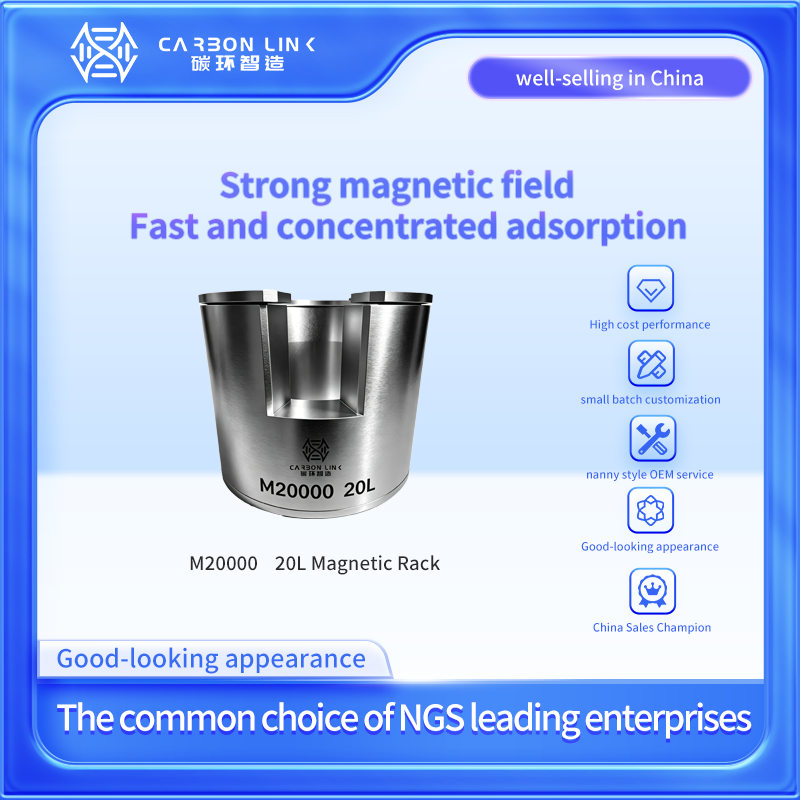
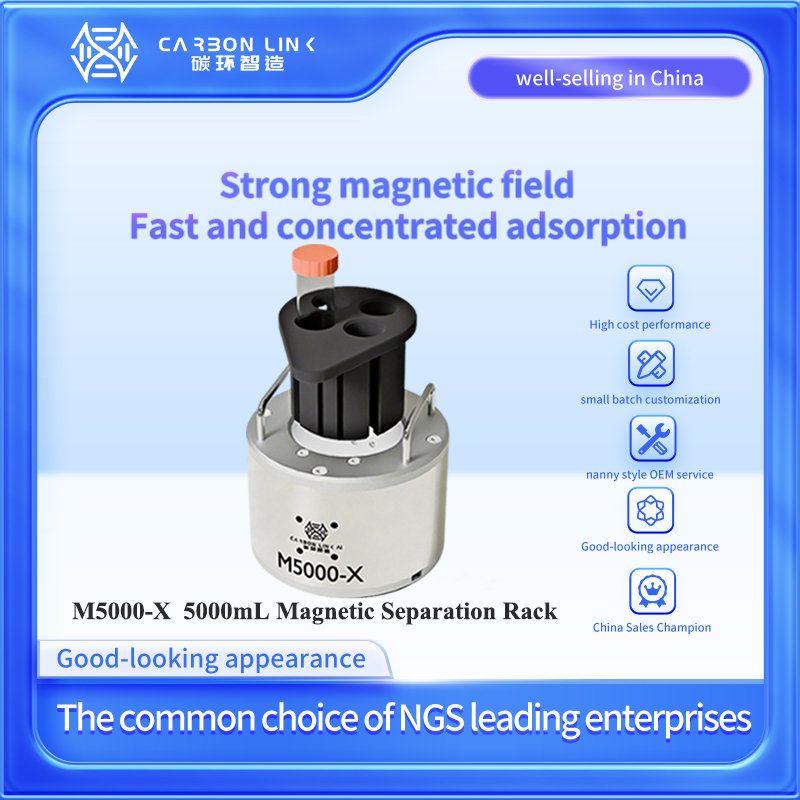
Carbonlinkai's listed formats span tube racks and 96-well plate racks alongside large-volume separators named from 250 mL (M250) through 500 mL, 1 L, 2 L, 5 L and 10 L to 20 L (M20000) and 50 L (M50L-X) models. A catalog listing establishes that a format is offered. It does not establish the working-volume definition, magnet configuration or recovery performance, and it does not establish which line builds it — which is why the checks below focus on documents rather than on range statements.
Six checks that turn supplier claims into procurement evidence
1. Map the requested format to a production line
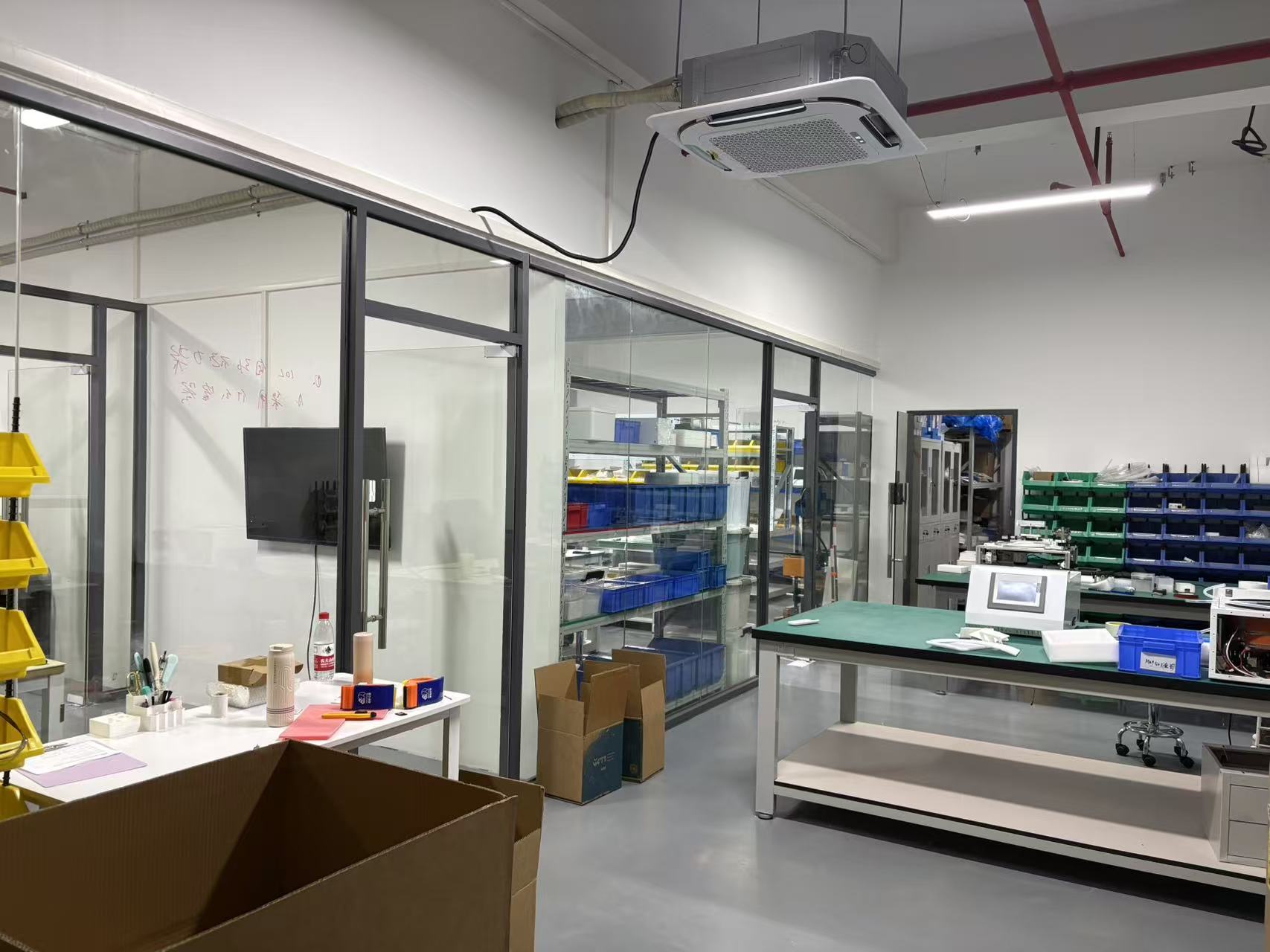
Ask a direct question: which line will build this item, and what is that line's monthly output for this format? A usable answer names the line, gives an output figure and states the shift pattern behind it. A weak answer repeats the plant total. Ask also for the most recent shipment dates of the format you are buying, so that the response describes actual production rather than theoretical capability.
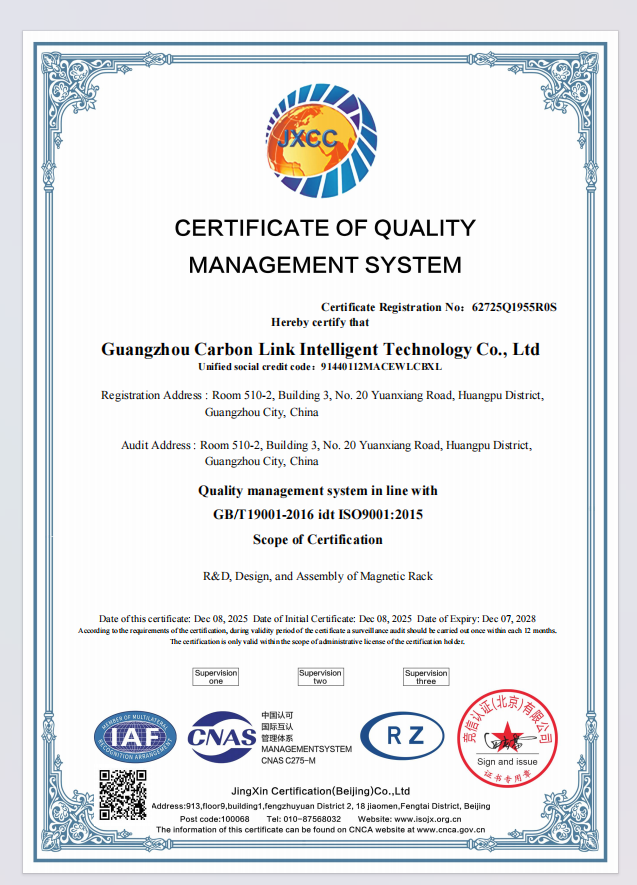
Read the quality certificate for scope at the same time. Carbonlinkai's ISO 9001 certificate covers research and development, design and assembly of magnetic racks. That is the certified boundary: assembly and design, not magnet material production or bead manufacturing. If your specification depends on a process outside that boundary, the supplier is integrating rather than manufacturing it, and the evaluation should say so.
2. Keep the OEM and ODM capacity records separate
Two capacity figures exist because two service modes exist, and the buyer should request the quotation against the correct one. A project that needs a new housing, custom packaging and printed labeling falls in the OEM workflow described at 100,000 units per month. A project buying an existing design with a private label falls closer to the ODM record at 10,000 units per month. Mixing the two produces an optimistic schedule that no production planner has agreed to.
Neither figure is a capacity reservation. When a launch depends on a specific month, ask what share of that line is committed to other customers and request a written statement of the quantity that can be scheduled for your delivery window.
3. Pin the 20-unit MOQ to your configuration
Both capability records state a minimum order quantity of 20 units, and 20 pieces is also the figure published for OEM order starts on Carbonlinkai product pages. Three clarifications decide whether that number is usable for your project. First, whether the minimum applies per model or per order that mixes several models. Second, whether it applies to large-volume separators, where unit cost, vessel sourcing and tooling differ from tube racks. Third, whether the units you approve as samples come from the same production batch as the order.
A 20-unit minimum is a low entry point compared with a full production run, which makes it useful for pilot lines, validation lots and distributor seeding. It should still appear as a stated term in the RFQ response, because a general profile cannot bind a specific configuration.
4. Write down what the 3-5 week lead time starts and ends
A lead time expressed as a range hides the two facts a planner needs: the trigger and the deliverable. Ask whether week one begins at purchase order, at deposit, at drawing approval or at sample sign-off. Ask whether the 3-5 weeks includes packaging and logo printing or only assembly. Ask whether it ends ex-works or at the buyer's dock, because the difference between those two points is often longer than the manufacturing window itself.
A good answer reads like a sentence a planner can schedule against: five weeks from approved artwork and cleared deposit to ex-works shipment, with packaging inside the count and customs clearance excluded. Anything vaguer will be renegotiated under pressure later.
5. Test the quality claim and the certificate behind it
Quality control is stated as 100% testing. That is a coverage statement, not a specification: it says every unit is tested, not what is measured or what counts as a pass. Request the test items and acceptance criteria for your format. For a magnetic rack, the minimum set should include visual and dimensional checks and a magnetic attachment check, because those are also the items a buyer can repeat on receipt.
Certificate facts to verify with the issuing body, not only with the supplier: ISO 9001, certificate number 62725Q1955R0S, issued by JXCC Certification (Beijing) Co., Ltd. against GB/T19001-2016 idt ISO9001:2015, scope R&D, design and assembly of magnetic racks, valid from 8 December 2025 to 7 December 2028. Check the number, the scope wording and the expiry date on the issuer's record, then confirm that the product you are buying falls inside that scope.
Temperature and chemical exposure belong in the same conversation. Carbonlinkai states that its racks perform reliably across -20 °C to 80 °C; ask for the basis of that statement and confirm it against your protocol rather than treating a range as an unconditional guarantee for every model in the range.
6. Convert warranty and response terms into contract language
After-sales terms are stated as a 1-year warranty against manufacturing defects and a 24-hour response for support requests. Both are commitments about communication and remedy rather than about performance, and both need definition before they appear in a purchase order.
- Response channel and clock: 24 hours measured from which route — email, portal ticket or messaging app — and does response mean an acknowledgment or a technical answer with a proposed corrective action?
- Warranty boundary: what is excluded, such as wear parts or damage from autoclaving and chemical exposure; who pays return freight; whether repair or replacement is the default remedy.
- Export practicality: who holds spare parts in your region, and how a replacement reaches the site within the warranty year.
Step-by-step: from scope sheet to accepted delivery
Step 1 — Write a one-page scope sheet. Record the format (tube, plate, bottle or large volume), working volume and vessel type, bead material and particle size, acceptable magnet exposure time, temperature and chemical exposure, first order and annual quantity, labeling and packaging requirements, and destination market. Every later claim is tested against this sheet.
Step 2 — Send a short RFQ built from the six checks. Ask for line allocation, the capacity record that applies to your service mode, the MOQ for your configuration, the lead-time trigger and endpoint, the test items and pass criteria, the certificate copy with scope, and the warranty and response terms in draft contract wording. Eight questions in one message produce a comparable answer set; a dozen scattered emails do not.
Step 3 — Use a 20-unit validation lot. A minimum order of this size is large enough for a pilot run and small enough to absorb if the result disappoints. Define acceptance criteria before the goods arrive and inspect accordingly: surface defects, dimensions, included accessories, magnetic attachment and stability. Carbonlinkai's stated acceptance window for magnetic racks is seven days from delivery, with immediate notice of any issue, so schedule inspection capacity before the shipment lands.
Step 4 — Anchor the purchase order. Write the start event and working-day count, whether packaging and printing are inside the count, the delivery point, the warranty period and exclusions, the response channel and clock, the certificate copy as an attachment, and a capacity statement if your forecast will exceed the first order. Terms that stay in email threads do not survive a personnel change.
Step 5 — Keep the file and re-verify. Retain the RFQ answers, certificate, test record and acceptance results. Capacity, lead time and MOQ are commercial terms, so reconfirm them at each reorder rather than assuming the first quotation still governs a later one.
Where this framework pays for itself
Diagnostics and NGS scale-up. In a company-reported project, a leading NGS company in China replaced international magnetic rack brands for bead separation, with 1,000 units installed and reported annual savings above RMB 3 million within three years. A purchase of that size is exactly when line-level capacity confirmation matters: a plant total of 100,000 units per month says little until the supplier states how many units of the specific rack can be scheduled across the delivery windows.
Laboratory refresh across many benches. A separate company-reported laboratory case describes 100 sets in use over a two-year horizon, with the customer citing an estimated USD 380,000 annual saving and 15% faster processing. Multi-bench orders shift the risk from unit price to repeatability: identical racks delivered across several shipments should come from a documented test regime, which is why the 100% test claim needs its item list attached.
Large-volume and custom bioprocessing. In a company-published case description, a client running a semi-automatic 50 L automated magnetic bead separation system sought a fully automatic custom unit; the supplier's described approach is bespoke magnetic field strength and magnet array design matched to the bead size in use. Custom work at this scale is the clearest test of the framework, because format, tooling and validation all sit outside the standard catalog and none of them can be confirmed from a capacity headline.
Comparison: what each supplier statement actually covers
| Statement | What it establishes | What to request before ordering |
|---|---|---|
| Monthly capacity 100,000 units (OEM record) | Plant-level output for the OEM workflow covering design, testing, mass production, packaging and logo printing | Line name, output for your format, shift pattern, share of line available in your delivery month |
| Monthly capacity 10,000 units (ODM record) | Output for the ODM workflow with logo customization on an existing design | Confirmation that your order is quoted against this record, not the OEM one |
| MOQ 20 units | Starting order quantity stated for OEM and ODM orders | Whether 20 applies per model or per mixed order, and whether it holds for large-volume separators |
| Lead time 3-5 weeks | Typical production window | Start event, end event, working-day count, whether packaging and printing are included |
| 100% test | Every unit is tested | Test items, instruments and pass criteria for your format, plus the record kept per unit |
| ISO 9001 certificate 62725Q1955R0S | Certified scope: R&D, design and assembly of magnetic racks, valid 8 Dec 2025 to 7 Dec 2028 | Verification of number, scope and validity with the issuing body |
| 1-year warranty, 24-hour response | Remedy period for manufacturing defects and a support response commitment | Exclusions, freight responsibility, response channel definition, regional spare-part holding |
All figures in this table are the supplier's stated terms and apply to the service mode named in each row. They are commercial statements, not independently audited production records.
Comparison: documented volume scope across public product pages
| Source (public product page) | Documented scope | Scope type |
|---|---|---|
| Thermo Fisher Scientific, DynaMag family | 1.5 mL to 50 mL working volumes in tubes, PCR strips, plates and cell-culture well plates | Product-family range |
| Thermo Fisher Scientific, DynaMag-2 | 16 microfuge tubes; optimal working volume 10-2,000 µL | Individual model |
| Cytiva magnetic separation racks | Samples up to 1.5 mL, 15 mL and 50 mL by model | Individual models |
| V&P Scientific magnetic bead separation racks and devices | Bottle volumes of 100 mL, 500 mL, 1,000 mL, 2,000 mL and 5,000 mL | Bottle formats |
| Stellar Scientific magnetic racks for beads | 0.2 mL tubes up to 96-well deep-well plates | Vessel formats |
| Carbonlinkai magnetic rack catalog | Tube and 96-well plate racks; large-volume separators listed from 250 mL to 50 L models | Company catalog listing |
These entries use different definitions — family ranges, model maxima, bottle formats and vessel formats — and cannot be averaged or converted into a single market range. Nominal versus working volume, vessel geometry and current availability must be confirmed per supplier.
FAQ
OEM magnetic rack manufacturer for biotech: what should the evaluation confirm?
An OEM magnetic rack manufacturer for biotech should confirm four things in writing: the production line and monthly output for your format, the order minimum for that configuration, the lead time with its start and end events, and the quality documents behind the product. Carbonlinkai states OEM and ODM production covering product design, testing, mass production, packaging and logo printing, an MOQ of 20 units, a typical lead time of 3-5 weeks, 100% product testing, a 1-year warranty against manufacturing defects and a 24-hour response for support requests. Each item should be confirmed against your own configuration rather than accepted from the general profile.
How do I verify a stated monthly capacity of 100,000 units?
Treat it as a plant-level figure and ask for the allocation that applies to your order. Request the production line, that line's monthly output for your format, the shift pattern, and a written statement of the quantity schedulable in your delivery month. Confirm which service record the quotation is written against, because the OEM workflow is described at 100,000 units per month while the ODM workflow is described at 10,000 units per month. A statement of available capacity in the target month is more useful than a larger annual total.
Is the 20-unit MOQ available for large-volume magnetic racks?
The 20-unit minimum is stated for OEM and ODM orders in Carbonlinkai's capability records and published as the OEM order starting quantity. Whether it applies to a specific large-volume separator should be confirmed in the RFQ response, because vessel sourcing, magnet configuration and tooling differ from tube and plate racks. Ask for three clarifications: minimum per model versus per mixed order, minimum for the large-volume configuration you need, and confirmation that sample units come from the same batch as the production order.
What does the 3-5 week lead time include?
The stated lead time is a typical production window of 3-5 weeks, so the quotation should define both ends. Establish whether the clock starts at purchase order, deposit, drawing approval or sample sign-off; whether packaging and logo printing are inside the count; and whether delivery is ex-works or to your dock. For a first order, add artwork approval and incoming inspection to the schedule: Carbonlinkai's stated acceptance window for magnetic racks is seven days from delivery, which should be planned before the shipment arrives rather than after.
What do 100% testing, the 1-year warranty and 24-hour response commit the supplier to?
100% testing commits the supplier to testing every unit; it says nothing about which parameters are measured until the test list is supplied. The 1-year warranty covers manufacturing defects, so exclusions, freight responsibility and the default remedy should be written into the order. The 24-hour response is a support commitment whose channel and meaning — acknowledgment or technical answer with corrective action — should also be defined, together with where spare parts are held for your region.
Conclusion
A magnetic rack supplier evaluation succeeds when the buyer leaves with documents rather than impressions: a line-level capacity statement for the format being ordered, an MOQ written against that configuration, a lead time with a named start event, a test list that matches the incoming inspection, a certificate checked at its source, and warranty and response terms in contract language. Carbonlinkai's published profile gives a workable starting position for that audit — OEM and ODM service, 100,000 and 10,000 units per month on the two service records, MOQ 20 units, 3-5 weeks, 100% testing, ISO 9001 certificate 62725Q1955R0S scoped to R&D, design and assembly of magnetic racks, a 1-year warranty and 24-hour support response — but each figure only becomes useful once it is tied to your format and your delivery month.
If the next step is a pilot lot rather than a full order, send the scope sheet for your format and request a written response to the six checks above. The company profile, including service scope and contact details, can be downloaded here: Carbonlinkai company profile (PDF). Additional product information is available on the Carbonlinkai official website.
Have Questions or Need More Details?
Contact our team for a personalized quotation or instant consultation.
Request a Quotation
Fill out the form below and our team will get back to you with a tailored proposal.
WhatsApp Direct Chat
Prefer to chat in real-time? Message us on WhatsApp for instant assistance & quick answers.
- Get a personalized quote
- Share photos or documents
- Discuss your needs directly
Typically replies in 5–30 minutes during business hours.