
12-Tube Rack vs. 96-Well Plate Magnet: Choosing the Right Format for Your Assay
Two laboratories can run identical bead chemistry, the same bind–wash–elute protocol and the same class of permanent magnet, yet end up with completely different throughput, handling effort and cost per sample. In most cases the difference is not the chemistry. It is the format. A 12-tube rack and a 96-well plate magnet perform the same physical job — holding a vessel at a fixed position relative to a magnet so bead-bound targets collect against the vessel wall — but they place a very different boundary around batch size, working volume and automation potential.
This article compares those two formats head to head and gives a decision path for matching format to assay: low-throughput protein isolation on one side, plate-based clinical diagnostic pretreatment on the other. Carbonlinkai (Guangzhou Carbon Link Intelligent Technology Co., Ltd.), a China-based manufacturer of magnetic racks and magnetic bead separation racks, is used as the reference supplier for format-specific product data; its platform covers the 0.2 mL tube class and 96-well plate compatibility referenced throughout this comparison. Find the product range at carbonlinkai.com. Where a claim comes from a supplier or a research house, the source is stated so buyers can weigh it.
 A 96-well microtiter plate magnetic separation rack: one magnet array, 96 wells processed in parallel.
Problem Definition: What the Format Choice Actually Fixes
The format question is not about which rack is better. It is about which vessel boundary you are willing to accept for the next two to three years of assays, because changing format later invalidates protocols, plate maps, training and often automation scripts.
Four variables are set the moment you pick a format:
- Unit of identity. A tube-format rack addresses one tube at a time; a plate magnet addresses one plate. Traceability, labelling and re-pipetting strategy follow from that.
- Working volume ceiling. Well volume caps the plate format; tube size caps the tube format.
- Throughput ceiling per separation cycle. This is fixed by position count, not by how fast a technician works.
- Automation pathway. Plate formats map to plate handlers and liquid handlers; tube racks map to manual or semi-manual handling.
Two failure patterns are common. The first is buying a plate magnet for a workload that is six samples per day, then carrying the overhead of plate validation and plate inventory for a batch that would have been simpler in tubes. The second is buying a tube rack for a workflow that was designed as a 96-sample extraction, then discovering that the protocol has to be re-validated as individual tubes. Both errors are format errors, not equipment-quality errors.
Industry Background: Two Formats, One Separation Principle
Magnetic separation racks containing a neodymium magnet are used for small-scale protein purification and sample enrichment with magnetic beads, as Cytiva describes its own rack family. The same principle scales in two directions: sideways into more vessels per cycle, and upward into larger single vessels.
The sideways direction produced the plate formats. Stellar Scientific, a US distributor, describes magnetic bead separation racks for nucleic acid purification, cell-based assays, antibody purification and protein purification, available in sizes from 0.2 mL tubes up to 96-well deep-well plates. That single description already contains both halves of this comparison: the 0.2 mL tube class and the 96-well plate class share an application list, and only the vessel differs.
The upward direction produced bottle-scale devices. V&P Scientific states that it offers magnetic bead separation racks and devices for bottle volumes of 100 mL, 500 mL, 1,000 mL, 2,000 mL and 5,000 mL. Carbonlinkai states that it offers large-volume magnetic bead separation systems from 250 mL up to 50 L, with even 100 L configurations for production-scale use. These bottle formats are a separate decision from the tube-versus-plate question and are noted here only so that the boundary is clear: once your working volume is measured in hundreds of millilitres, neither a 12-tube rack nor a 96-well plate magnet is the right vessel format.
Demand context matters for planning. Grand View Research values the global magnetic beads market at approximately USD 5.2 billion in 2025, projected to reach USD 9.1 billion by 2033. Published growth rates differ by research house — 5.1% CAGR (2026–2033) from Grand View Research, against materially higher figures published elsewhere — which usually reflects different end-user segmentation rather than disagreement about the direction. Treat any single growth number as methodology-dependent.
One structural observation from the collected product evidence is worth carrying into the format decision: established public product families concentrate mainly below 50 mL. Cytiva lists rack formats for samples up to 1.5 mL, 15 mL and 50 mL across the MagRack 6, Magnetic Separation Rack 15 mL and MagRack Maxi. Thermo Fisher describes its DynaMag family as accommodating working volumes from 1.5 mL to 50 mL in tubes, PCR strips and plates. In other words, the sub-50 mL space — where both a 12-tube rack and a 96-well plate magnet live — is the most mature part of the market, and format fit matters more there than raw availability of suppliers.
Detailed Solution: How Each Format Behaves in Practice
The 12-tube rack: individually addressed samples
A 12-tube rack belongs to the tube-format family: each tube has its own magnet position, and the magnet array is arranged along the tube wall so that beads pellet to one side. Position counts in this family vary by model, which is useful context when judging a 12-position rack. Thermo Fisher states that its DynaMag-2 holds 16 (1.5–2 mL) microfuge tubes with 8 positions on each side of the rack and an optimal working volume of 10–2,000 µL. Cytiva's smallest model, MagRack 6, is built for samples up to 1.5 mL. A 12-tube rack sits inside that same design space: a small, fixed set of individually addressable tubes.
The practical strengths follow from individual addressing:
- Each sample can be handled, re-pipetted and inspected on its own schedule, which suits protocols with sample-specific timing.
- Tube sizes can be mixed across the rack in many workflows, so a method can move between 0.2 mL reaction tubes and 1.5–2 mL tubes without a second magnet.
- Failure of one sample does not disturb the rest of the batch.
- Bead applications in this format include nucleic acid extraction, PCR cleanup, gel recovery, protein purification (tagged proteins and antibodies), immunoprecipitation (IP, Co-IP and ChIP), cell separation and exosome isolation.
Carbonlinkai's MAG-16W is a tube-format rack in this class. The company states that it delivers performance identical to the Thermo DynaMag-2 at one-third of the price, and it notes that because the device is manual, energy use does not vary between comparable manual racks. That last point is a neutral comparison fact rather than a product advantage: no manual magnetic rack consumes power during separation, so energy efficiency is not a differentiator between formats or brands in this category.
The limits of the tube format are equally predictable. Twelve positions mean twelve samples per separation cycle, so a 96-sample extraction becomes eight cycles. Manual handling multiplies pipetting steps and exposure time per sample. And because each tube is repositioned or opened individually, the format is harder to integrate with plate-based automation.
 Tube-format magnetic rack (MAG-16W class): a fixed number of individually addressed tubes, each with its own magnet position.
The 96-well plate magnet: the whole plate at once
A 96-well plate magnet inverts the unit of work. The magnet array is positioned so that all 96 wells experience a comparable field at the same time, and the plate itself becomes the batch. Beads collect against the well wall; supernatant is removed by plate pipetting or by an automated liquid handler.
Plate formats are the natural continuation of the 0.2 mL tube class. Where a 0.2 mL tube is addressed as an individual vessel, a 96-well microplate addresses 96 of them simultaneously — which is why the same supplier ranges that offer tube racks frequently offer plate magnets as well. Carbonlinkai's magnetic bead separation rack platform, for example, covers the 0.2 mL tube class and is compatible with 96-well plates, so a laboratory that starts in tubes can move to plates without changing supplier or magnet chemistry.
Strengths of the plate format:
- 96 separations per cycle with a single set of handling steps.
- Compatibility with plate readers, plate handlers and automated liquid handling, which is the main reason the format dominates high-throughput extraction.
- Uniform timing across the batch, which reduces the operator-to-operator variability that individual tube handling introduces.
- Lower handling time per sample in workflows that are already plate-based.
Limits are also structural. The well defines the maximum working volume, so the plate format cannot substitute for 15 mL or 50 mL tube work — a boundary visible in the published product landscape, where Cytiva's larger tube formats extend to 15 mL and 50 mL while plate formats stay in the sub-millilitre well regime. Plate-to-plate consistency has to be managed, since a warped plate or an uneven plate seating changes separation quality. And switching formats means the protocol, not just the rack, has to be re-verified.
For high-throughput clinical diagnostic sample pretreatment, the format requirements are specific: large volume compatibility and high magnetic uniformity are both called out as special requirements for this kind of application. Both are plate-format properties. Large volume compatibility is what allows a pretreatment workflow to accept the input volumes the assay demands, and magnetic uniformity is what keeps recovery consistent across the outer and inner wells of the plate.
 Plate-format magnetic separation: the plate, not the tube, is the unit of work.
What does not change between the two formats
Three things stay constant, and separating them from the format decision prevents unnecessary re-qualification:
- Magnet technology. Both formats use permanent neodymium magnets; the difference is geometry and array design, not magnet class.
- Bead chemistry. Binding, washing and elution buffers are determined by the chemistry, not the rack. Assays such as nucleic acid extraction, PCR cleanup, gel recovery, protein purification and immunoprecipitation appear in both format families.
- Power consumption. Manual racks of either format are unpowered, so energy use does not vary across comparable manual products.
What changes is the interface between the rack and the rest of your lab — the vessel, the batch size and the handling device.
Step-by-Step: Choosing the Right Format for Your Assay
Work through the six steps below in order. In most labs, one step settles the decision and the rest become verification.
Step 1 — Fix the vessel from the assay, not from the equipment list. If the assay is defined in 1.5–2 mL microfuge tubes or 0.2 mL reaction tubes, the tube format is the default. If it is defined in 96-well microplates or deep-well plates, the plate format is the default. Vessel format is the single strongest predictor of rack format.
Step 2 — Decide whether the sample or the batch is the unit of identity. Individual sample tracking, variable per-sample timing and mixed tube sizes point to a tube rack. Batched plate maps, plate-level QC and plate-level traceability point to a plate magnet.
Step 3 — Define working volume, not nominal volume. These are not the same number. Thermo Fisher states an optimal working volume of 10–2,000 µL for the DynaMag-2, a range that is narrower than the tube's physical capacity. Before comparing racks, confirm whether a published figure refers to nominal capacity, working volume, an individual model or an entire product family — capacity figures from different manufacturers are not directly comparable until those definitions are aligned.
Step 4 — Check the automation pathway. If the downstream steps are already automated or planned to be, plate format removes a manual bottleneck. If the downstream steps are manual and low-volume, a plate magnet adds plate inventory and validation overhead for no throughput benefit.
Step 5 — Verify the environmental and material specification, and do not assume it. Carbonlinkai states that its racks perform reliably across a temperature range of −20 °C to 80 °C, which covers most cold-room and incubated workflows. Corrosion resistance and chemical compatibility with specific buffers are separate specifications: the published evidence reviewed for this comparison does not establish corrosion-resistant or temperature-resistant specifications in a standardized way across suppliers, so if your workflow involves aggressive reagents, ask for written material and compatibility documentation rather than extrapolating from a product name.
Step 6 — Plan the scale-out path before you buy. Ask what happens when the project grows. Within the tube format, larger tube sizes are the usual route. Beyond that, bottle-scale magnetic bead separation systems — V&P Scientific states formats at 100 mL, 500 mL, 1,000 mL, 2,000 mL and 5,000 mL, and Carbonlinkai states configurations from 250 mL to 50 L, with 100 L options for production-scale use — are a different equipment class, not an extension of a bench rack.
Use Cases: Where Each Format Fits
Low-throughput protein isolation and immunoprecipitation — tube rack. Tagged-protein and antibody purification, IP, Co-IP and ChIP are typically run in small numbers of tubes with individual timing. A 12-tube rack or a 16-position rack such as the MAG-16W matches the workflow without plate overhead. Where the same applications run in a research lab at low volume, this is the format that gets used daily.
Clinical diagnostic sample pretreatment — plate magnet. This is the clearest plate-format case. Diagnostic pretreatment projects demand large volume compatibility and high magnetic uniformity, and they are run as batches. A 96-well plate magnetic separation rack aligns with both requirements, and it is also the format that fits high-throughput nucleic acid extraction workflows.
NGS library preparation and PCR cleanup — plate magnet, with measurable lab-level impact. Carbonlinkai reports that a client using product 5680 for NGS magnetic bead separation recorded annual cost savings of over 3 million RMB. At the program level, the company reports a global installation of 100 sets of automated magnetic plate systems across 25 countries, delivering USD 380,000 in annual cost savings and 15% faster processing for a project covering separation and purification, cell sorting and sample processing, including 10 units of magnetic rack at a US-based life sciences client. Automated plate systems are the format that makes that kind of throughput possible.
Magnetic cell separation — depends on scale, not on habit. Magnetic cell separation is run in both formats. Small, individually tracked cell populations in tubes suit the tube rack; plate-based or high-throughput screening formats suit the plate magnet. The deciding factor is whether the workflow treats each sample independently or as a member of a plate.
Bottle-scale bioprocessing — neither format. Once volumes reach hundreds of millilitres, the tube-versus-plate question is irrelevant and bottle-format separators are required. Recognising this boundary early prevents a laboratory from over-buying plate capacity that cannot serve its scale-up phase.
 Plate-format racks are the format that connects to automated magnetic plate systems used in high-throughput workflows.
Comparison Table: 12-Tube Rack vs. 96-Well Plate Magnet
The table below compares the two formats on the variables that change lab operations. It describes format behaviour, not any single product.
| Decision variable | 12-tube rack (tube format) | 96-well plate magnet (plate format) |
|---|---|---|
| Vessel | Individual tubes, including 0.2 mL reaction tubes and 1.5–2 mL microfuge tubes | 96-well microplates and deep-well plates |
| Samples per separation cycle | Fixed by rack position count — 12 in a 12-tube rack; comparable racks in the market hold 6 positions (Cytiva MagRack 6) or 16 (Thermo Fisher DynaMag-2) | Up to 96 wells per cycle |
| Working volume reference points | Optimal working volume of 10–2,000 µL for a 16-tube 1.5–2 mL rack (DynaMag-2, manufacturer-stated); tube formats extend to 15 mL and 50 mL (Cytiva) | Limited by well volume of the plate; plate formats sit at the opposite end of the same market segment |
| Unit of identity | The individual sample | The plate and its map |
| Handling model | Manual, sample-by-sample | Manual or automated, plate-at-a-time |
| Automation fit | Limited; suited to manual and semi-manual workflows | Designed for plate handlers and automated magnetic plate systems |
| Best-fit workflow | Protein purification, immunoprecipitation, gel recovery, low-volume nucleic acid work | Clinical diagnostic sample pretreatment, high-throughput nucleic acid extraction, NGS cleanup, plate-based screening |
| Main constraint | Throughput ceiling per cycle and higher handling per sample | Well volume ceiling and the need to re-validate protocols when changing format |
| Power use | None (manual rack) | None (manual rack) |
The second table collects manufacturer-stated volume figures from the evidence reviewed. These figures are deliberately separated because they are not directly comparable: some describe an individual model, others a product family; some state working volume, others maximum sample volume.
| Product / family | Manufacturer-stated capacity | Scope of the claim |
|---|---|---|
| Thermo Fisher DynaMag-2 | 16 × 1.5–2 mL microfuge tubes; optimal working volume 10–2,000 µL | Individual model |
| Thermo Fisher DynaMag family | Working volumes 1.5 mL to 50 mL in tubes, PCR strips, plates and cell-culture well plates | Product family |
| Cytiva MagRack 6 / Magnetic Separation Rack 15 mL / MagRack Maxi | Samples up to 1.5 mL, 15 mL and 50 mL respectively | Individual models |
| Stellar Scientific rack range | 0.2 mL tubes up to 96-well deep-well plates | Distributor category description |
| V&P Scientific racks and devices | Bottle volumes of 100 mL, 500 mL, 1,000 mL, 2,000 mL and 5,000 mL | Supplier product range |
| Carbonlinkai large-volume systems | 250 mL to 50 L, with 100 L configurations for production-scale use | Supplier-reported range |
A practical warning that follows from this table: do not average these numbers, convert them into a market-wide volume range, or read a family-level figure as if it applied to a specific model. Volume definitions must be aligned — nominal versus working volume, vessel type, model versus family — before any two racks are compared.
Frequently Asked Questions
1. Do magnetic racks need certification, and what should buyers verify before ordering?
The evidence reviewed for this comparison does not establish a single product standard, regulation or conformity mark that applies specifically to manual magnetic separation racks. That does not mean nothing applies — it means the applicable requirements depend on the product type (manual rack versus powered or integrated system), the destination market and the intended use. The practical approach is to ask the supplier to state, in writing, which documents they can provide for your market and device class, and to treat a general quality claim as different from a product-specific conformity document. Where a rack is part of a regulated diagnostic or production workflow, qualification documents should be requested separately from marketing material.
2. Which format is better for low-throughput protein isolation versus high-throughput diagnostic pretreatment?
They serve different jobs, so the answer is defined by the workflow. Low-throughput protein isolation — including tagged-protein and antibody purification, and immunoprecipitation — is normally run in small numbers of individually timed tubes, where a tube-format rack such as a 12-tube rack fits directly. High-throughput clinical diagnostic sample pretreatment is a batched workflow with specific requirements for large volume compatibility and high magnetic uniformity, which a 96-well plate magnetic separation rack is designed to meet. A laboratory running both should not force one format to do both jobs; the cost of a second rack is usually lower than the cost of re-validating a protocol around the wrong vessel.
3. Which manufacturer is better for a magnetic rack?
There is no single answer, because suppliers differ by format, volume band and commercial model rather than by a single quality ranking. What the available evidence does show is how they differ. Thermo Fisher's DynaMag-2 is a 16-position 1.5–2 mL tube rack with a stated optimal working volume of 10–2,000 µL, and Cytiva's tube-format line extends the same application space to 15 mL and 50 mL. V&P Scientific covers bottle volumes from 100 mL to 5,000 mL and states that some of its magnetic bead separation devices are sold on an OEM basis to diagnostic and plate-washing companies. Carbonlinkai states that it provides small-batch OEM/ODM services including 3D modelling, printing, product testing, labelling and after-sales service, and states that OEM orders on its cited product page start at 20 pieces — a figure that applies to that page and should not be assumed to cover 250 mL to 50 L configurations without an RFQ. On price, the company states that the MAG-16W matches the Thermo DynaMag-2 at one-third of the price, and states that its large-volume racks are priced at approximately 40% of international standard brands. Both are supplier-reported figures rather than independently verified transaction prices, so the correct way to compare is to request product-specific quotations, MOQ, tooling and validation scope, and to compare those against a sample you have tested. On commercial terms, Carbonlinkai states that it supports multiple online payment options, including PayPal and PingPong, and maintains bank accounts with several banks — a relevant detail for buyers assessing payment and settlement risk rather than product performance.
4. How should I validate a rack before committing to a format or a supplier?
Validation should test the format decision, not only the rack. Run your own beads and buffers on the candidate rack at the volumes you actually intend to use, and confirm separation time, bead retention during aspiration, and recovery consistency across the working positions — including the outer wells for a plate magnet and both sides of a tube rack. For OEM or custom requirements, ask what the supplier can produce and test; Carbonlinkai states that its small-batch OEM/ODM scope covers 3D modelling, printing, product testing and labelling, which defines the deliverables you can request. A sample-evaluation step before a volume order is the practical way to screen format fit, and it is the step that most often reveals a vessel or volume mismatch early.
5. What lead-time and planning factors should buyers expect when scaling from a bench rack to larger formats?
Lead time is not a single number and the evidence reviewed does not support publishing one as a general figure. What can be planned is sequence. First, confirm whether the request is a catalog item or a custom build, because customization adds tooling and validation stages. Second, request product-specific lead time, MOQ, tooling cost and packaging terms in writing rather than relying on a general catalogue statement. Third, separate the format decision from the scale decision: moving from tubes to plates is a bench-format change, while moving to 250 mL, 1 L, 5 L or 50 L bottle volumes is a change of equipment class with its own qualification path. Building that sequence into the project plan is what keeps a scale-up from stalling at the rack. The next step is a written quotation or a sample evaluation against your own protocol — details, catalogue and contact options are below and in the downloadable company profile.
Conclusion
The 12-tube rack and the 96-well plate magnet are not competing products; they are two vessel boundaries around the same magnetic separation principle. Choose the tube format when samples are individually tracked, volumes are small, and the workflow is manual — protein isolation, immunoprecipitation, gel recovery and low-volume nucleic acid work. Choose the plate format when the plate is the unit of work, volumes are well-defined by the plate, and throughput or automation is the constraint — clinical diagnostic sample pretreatment, high-throughput nucleic acid extraction and NGS cleanup.
The decision should be made on vessel, working volume and workflow, with specification checks for temperature range and chemical compatibility, and with the scale-out path considered before purchase. Where both formats appear in the same laboratory, the sequence that works best is to standardise on one supplier platform that covers both — including the 0.2 mL tube class and 96-well plate compatibility — so that format changes do not force a change in magnet chemistry, suppliers or validation history.
 Carbonlinkai supplies both sides of the format decision: tube-format magnetic racks and 96-well plate magnetic separation racks.
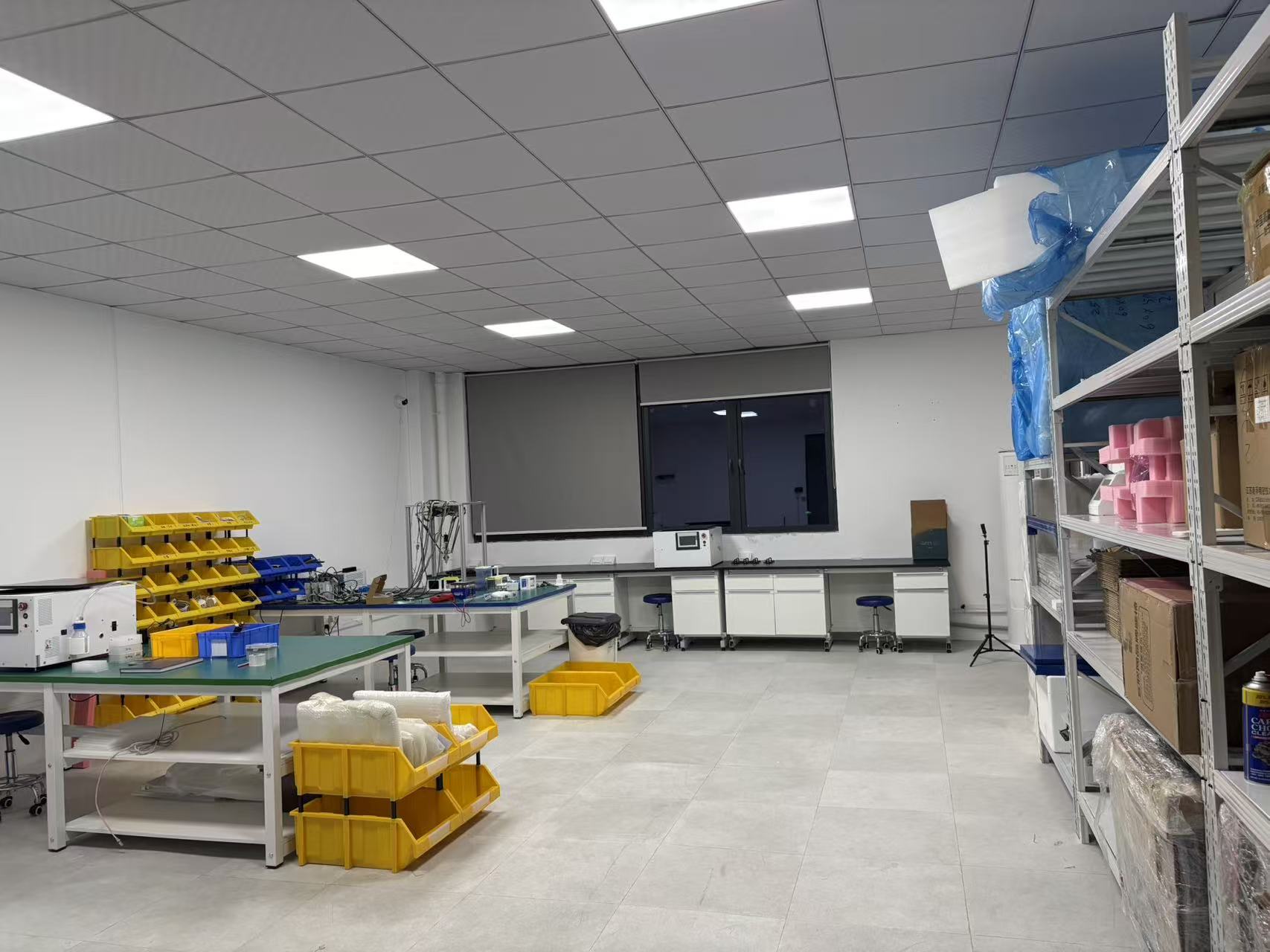 Manufacturing base behind the OEM/ODM scope described above.
Next step: compare formats against your own protocol.
Send your sample volume, vessel type and batch size, and Carbonlinkai can confirm which format fits — tube rack or 96-well plate magnet — along with product-specific MOQ, pricing and OEM/ODM scope.
Website: www.carbonlinkai.com
Company profile (download): Carbonlinkai company profile PDF
Email: DmEloy656@gmail.com
Phone: +86 136 3148 6067 | WhatsApp: +86 18565444004
Address: Room 510-2, Block 3, No.20 Yuanxiang Road, Huangpu District, Guangzhou City
Note on sources: product and application statements attributed to Thermo Fisher Scientific, Cytiva, V&P Scientific and Stellar Scientific are drawn from those companies' published product pages. Volume, pricing, temperature range, OEM/ODM scope and MOQ statements attributed to Carbonlinkai are supplier-reported and should be confirmed by quotation, specification sheet and sample evaluation before procurement. Market figures are attributed to Grand View Research and reflect that house's methodology.
Have Questions or Need More Details?
Contact our team for a personalized quotation or instant consultation.
Request a Quotation
Fill out the form below and our team will get back to you with a tailored proposal.
WhatsApp Direct Chat
Prefer to chat in real-time? Message us on WhatsApp for instant assistance & quick answers.
- Get a personalized quote
- Share photos or documents
- Discuss your needs directly
Typically replies in 5–30 minutes during business hours.