Magnetic Rack Supplier Evaluation: Verifying Capacity, Lead Time, and Delivery Assurance
Magnetic rack supplier evaluation comes down to three questions that can be answered with documents rather than assurances: can the factory produce your volume, can it deliver inside the promised window, and what protection exists after the shipment leaves. For buyers sourcing 250 mL to 50 L magnetic bead separation racks, the practical difference between suppliers is rarely the product photograph — it is whether the claims behind monthly capacity, lead time and warranty can survive an RFQ, a sample run and a batch-record review.
This article sets out a five-part evaluation framework and a seven-step workflow. Supplier-published figures from Carbonlinkai (Guangzhou Carbon Link Intelligent Technology Co., Ltd., carbonlinkai.com) — 100,000 units per month of stated production capacity, a typical 3–5 week lead time, a 20-unit minimum order quantity, 100% testing, and a 1-year warranty with a 24-hour support response — are used throughout as a worked example of how each claim should be converted into a verifiable step.
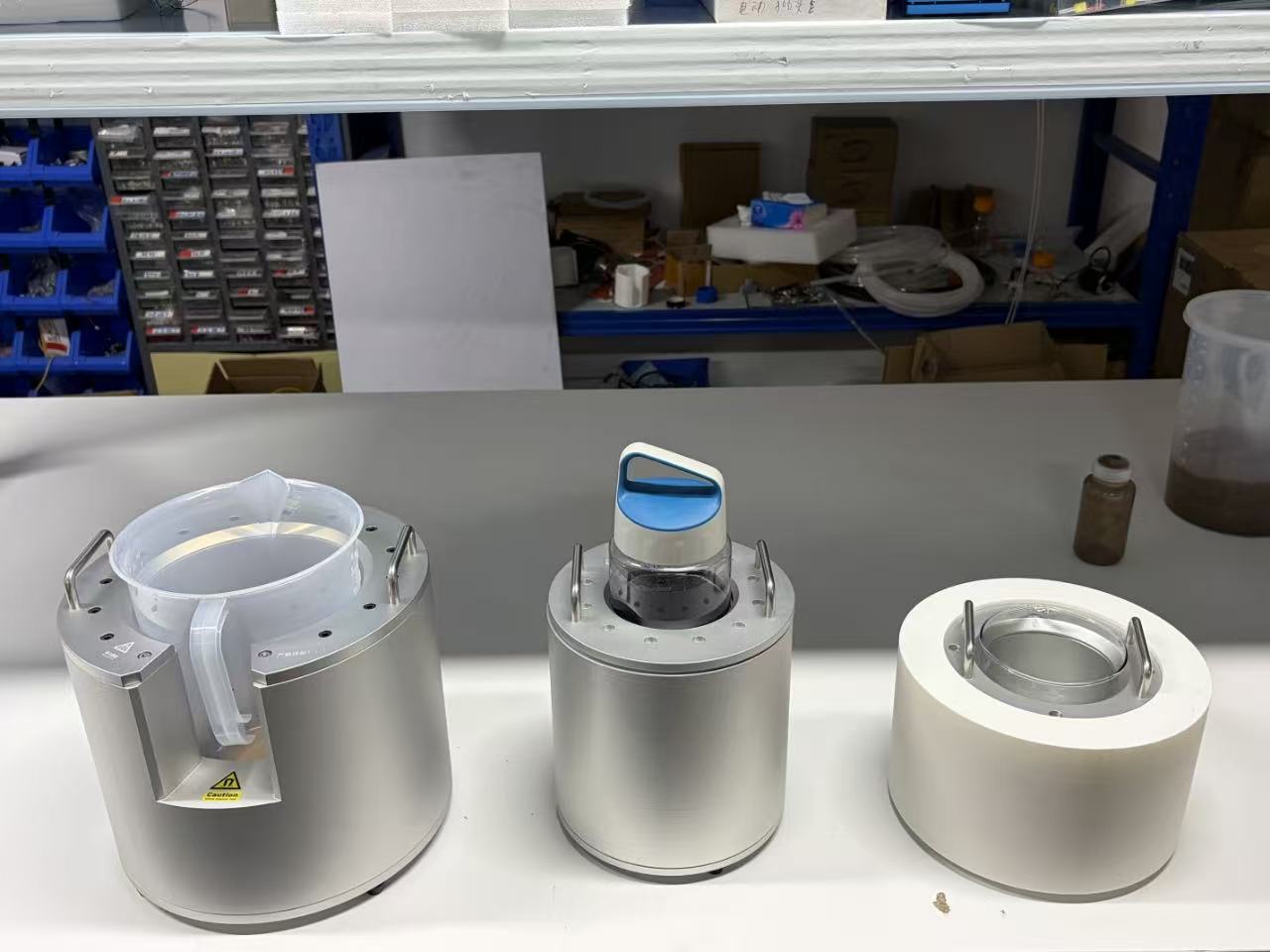
Capacity claims should be traceable to a physical production floor, a staffing level and a stated bottleneck process.
Problem Definition: Three Gaps Buyers Discover After the Order
Magnetic rack product pages across suppliers look nearly identical. Vessel formats are described in millilitres, magnets are described as high-gradient, and the applications listed are the same. What differs — and what determines whether a project stays on schedule — is the quality of the evidence behind three specific claims.
Gap 1: Capacity stated without an order-size test. A figure such as 100,000 units per month is only meaningful once it is compared with the buyer's own demand. An order of 500 units represents roughly 0.5% of a stated 100,000-unit month; an order of 20,000 units does not. Suppliers that can show capacity per line, per shift and per bottleneck process are far easier to plan around than suppliers that only publish a headline number.
Gap 2: Lead time quoted without scope. A 3–5 week lead time can include or exclude magnet sourcing, curing, quality testing, packaging and private-label printing. Two suppliers can quote the same number of weeks and deliver a two-week difference in practice, because one has already started the clock before the deposit clears.
Gap 3: Delivery assurance that ends at the loading dock. Warranty terms, support response windows and export documentation are usually the least-read part of a quotation, yet they are the part that matters when a rack fails to meet a validation threshold or arrives with a documentation gap.
A practical evaluation rule follows from these gaps: every supplier claim should be convertible into a document, a number, or a named responsible person. Claims that cannot be converted should be treated as marketing, not as planning inputs.
Industry Background: Where Large-Volume Magnetic Rack Sourcing Actually Begins
A magnetic bead separation rack is a laboratory magnetic device that uses high-gradient permanent magnets to rapidly and reproducibly isolate paramagnetic particles from suspension. Common materials are aluminium alloy and acrylic. The working principle is stable across the category, which is precisely why supplier differentiation shifts to production and delivery capability rather than product concept.
Application and format map
Magnetic rack applications cluster into a small number of recurring workflows: separation and purification of DNA, RNA or protein samples labelled with magnetic beads; cell sorting through magnetic labelling of surface antigens; removal of ferromagnetic impurities from sample solutions; and downstream use in nucleic acid purification, protein isolation, immunoprecipitation and NGS library preparation. Vessel formats follow the workflow — microtubes for 0.2 mL and 1.5/2.0 mL, conical tubes for 15 mL and 50 mL, 96-well plates for high-throughput work, and custom formats where tube geometry or magnet position must be adjusted.
What public product evidence shows about volume ranges
Published product evidence indicates that the established rack families are concentrated mainly below 50 mL. Thermo Fisher Scientific describes its DynaMag product family as accommodating working volumes from 1.5 mL to 50 mL across tubes, PCR strips, plates and cell-culture well plates, and describes the DynaMag-2 as holding 16 (1.5–2 mL) microfuge tubes with an optimal working volume of 10–2,000 µL. Cytiva lists racks for samples up to 1.5 mL, 15 mL and 50 mL. V&P Scientific publishes bottle-volume formats of 100 mL, 500 mL, 1,000 mL, 2,000 mL and 5,000 mL. Stellar Scientific, a distributor, describes rack sizes from 0.2 mL tubes to 96-well deep-well plates.
Above the 50 mL line, the supplier pool narrows. Carbonlinkai publishes large-volume magnetic bead separation racks and systems covering 250 mL up to 50 L, alongside microplate and tube formats. That is the range where supplier evaluation changes character: capacity, lead time and delivery assurance become the deciding variables, because a single large-volume unit can hold up an entire batch schedule.
Demand context — and its limits
The adjacent magnetic beads market was valued at approximately USD 5.2 billion in 2025 and is projected to reach USD 9.1 billion by 2033 according to Grand View Research. That figure describes the bead ecosystem, not magnetic racks, and no independently verified market-size, shipment or installed-base dataset for magnetic separation racks specifically was available in the evidence reviewed for this article. Capacity figures therefore have to be verified supplier by supplier rather than inferred from a category growth curve.
Detailed Solution: A Five-Part Supplier Evaluation Framework
The framework below is designed so that each part produces a written artefact — a capacity worksheet, a lead-time scope, a QC protocol, a commercial term sheet, and a delivery assurance clause. Carbonlinkai's published figures are used to show what a verifiable claim looks like at each stage.
Part 1 — Capacity verification
Carbonlinkai states a monthly production capacity of 100,000 units. A capacity claim of that size should be tested against three inputs: physical footprint, staffing, and engineering depth. The company profile lists a 700 m² production footprint, 20 employees and an R&D team of 17 engineers, with an export ratio of 30% and products sold to 25 countries and regions. Those numbers do not prove capacity on their own; they make it checkable. A buyer can ask how many of the 20 staff are on assembly, what the magnet-bonding bottleneck is, and what the largest single order shipped in the past year was.
Verification questions: What is capacity per line and per shift? Which process limits throughput? What percentage of a stated month would our order represent? Can you provide shipping records for the largest comparable order?
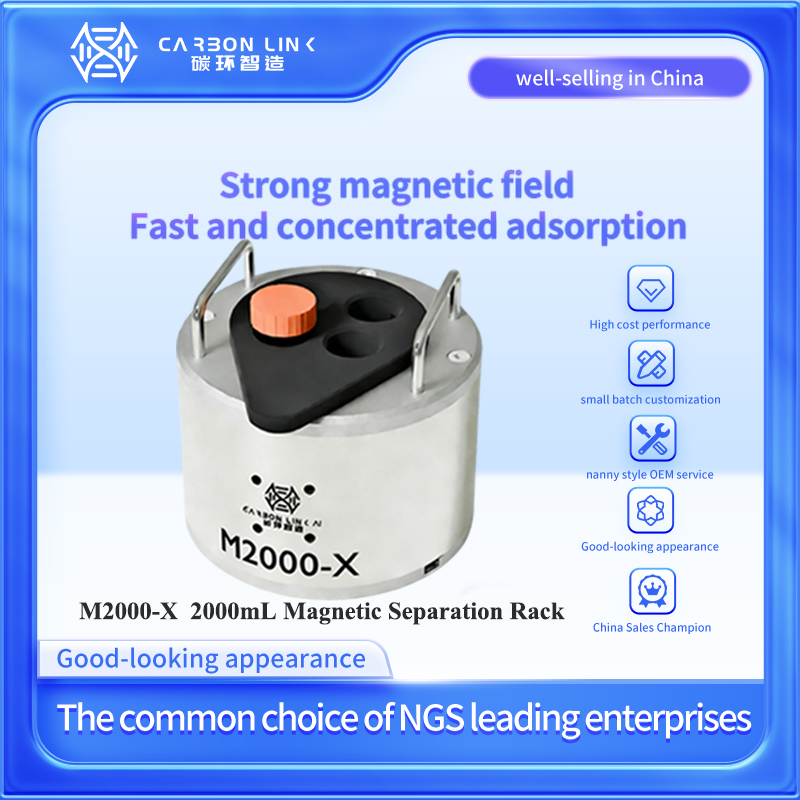
Defining the exact format first — 250 mL, 1 L, 2 L or 5 L — is what makes a capacity claim testable.
Part 2 — Lead time verification
Carbonlinkai lists a typical lead time of 3–5 weeks. The number matters less than its scope. A buyer should require the supplier to break the window into stages: magnet and material sourcing, assembly, curing and field stabilisation, quality testing, packaging, and private-label printing where applicable. Equally important is the trigger date — whether the clock starts on purchase order, on deposit receipt, or on sample approval.
Verification questions: Which stages are inside the 3–5 weeks and which are outside? What is the trigger event? What is the quoted lead time for a 20-unit order versus a 2,000-unit order? What happens to the schedule if the magnet batch fails incoming inspection?
Part 3 — Quality control verification
Carbonlinkai states 100% testing during quality control. For magnetic racks, a 100% test claim should be defined by what is measured and against which criteria. Relevant checks include magnetic field uniformity across positions, adsorption completeness at the specified working volume, dimensional fit against the target tube or plate, and surface condition after cleaning. Carbonlinkai also states that its racks function to support improved CV values for automated equipment, which is a workflow-level claim that should be validated during the sample stage rather than accepted from a page.
Material and environmental specifications are part of the same verification block. Carbonlinkai describes its carbon ring magnetic rack as using aerospace-grade neodymium iron boron magnets operating across -40°C to 80°C, screened through 72 hours of salt spray and thermal stability testing, with an outer shell that can be repeatedly wiped with 75% ethanol and, for some structural materials, autoclaved.
Verification questions: What is tested on every unit versus on a sampled basis? What are the pass/fail thresholds? Are batch records retained and available for review? What cleaning agents and temperatures are approved?
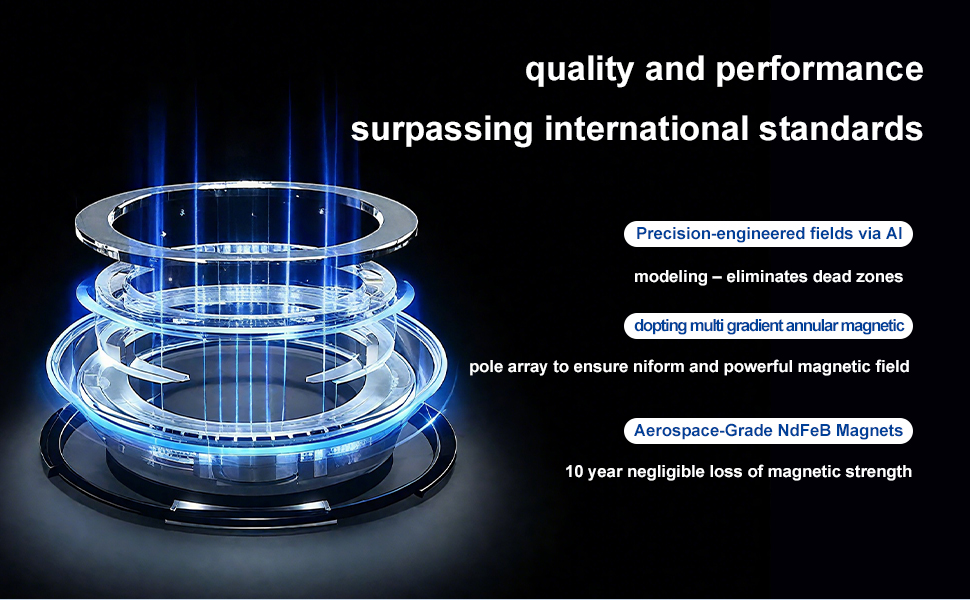
Field uniformity and dimensional fit are the two QC checks that most directly affect downstream assay consistency.
Part 4 — Commercial thresholds and OEM/ODM scope
Carbonlinkai states that OEM orders can start at 20 pieces and that its OEM production mode supports small-batch customization and private labelling, covering product design, testing, mass production, packaging and logo printing. Its published OEM/ODM service description also includes 3D modelling and printing as part of a one-stop small-batch service. For a buyer, the verification task is scope control: confirm in writing whether a 20-piece threshold applies to the exact large-volume format being quoted, and separate tooling cost from unit cost from labelling cost.
Verification questions: Does the 20-unit MOQ apply to our model and volume? What is included in the customization scope and what is charged separately? Who owns tooling and design files?
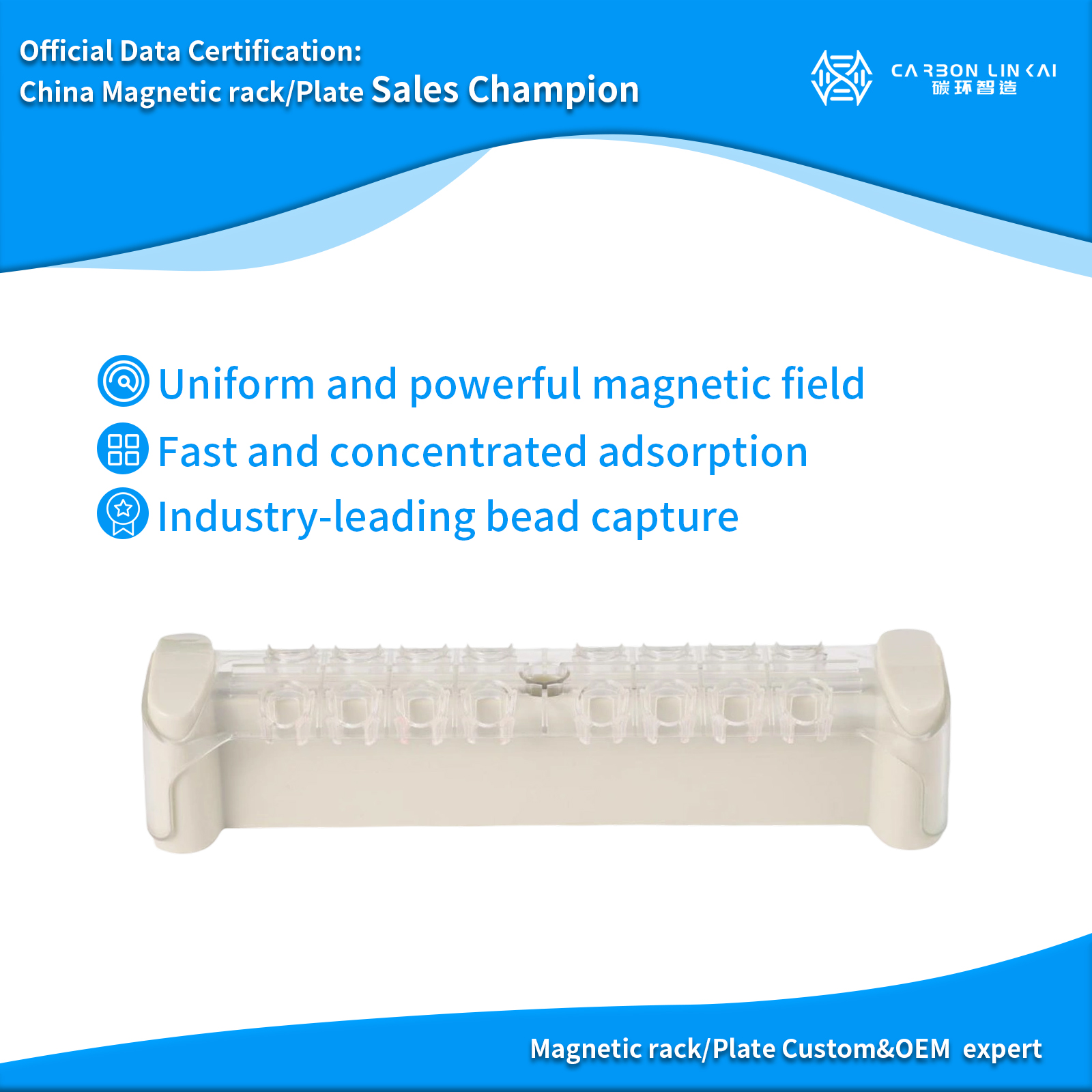
Small-batch thresholds are useful for pilot programmes, but the terms should be confirmed for large-volume formats specifically.
Part 5 — Delivery assurance and after-sales
Carbonlinkai lists export markets including the United States, China, Germany, the United Kingdom, Japan, India, South Korea, France, Canada and Brazil. Stated after-sales terms are a 1-year warranty against manufacturing defects and a guaranteed response within 24 hours for support requests. These are the terms to convert into contract language: warranty start date, what counts as a manufacturing defect, who pays return freight, spare-part availability, and how the 24-hour clock is measured across time zones.
| Supplier claim | Verification action | Evidence to request |
|---|---|---|
| Monthly capacity of 100,000 units | Test the figure against your own order size and the stated bottleneck | Capacity per line and shift; largest comparable shipment record |
| Lead time of 3–5 weeks | Decompose the window into sourcing, assembly, QC, packaging and labelling | Stage-by-stage schedule with trigger date and contingency notes |
| 100% testing during quality control | Define what is measured on every unit and against which thresholds | QC protocol, test equipment list, batch record sample |
| MOQ of 20 units with OEM/ODM scope | Confirm the threshold applies to the specific large-volume model | Written term sheet separating tooling, unit, packaging and labelling cost |
| 1-year warranty and 24-hour response | Convert into contract clauses with defined start date and measurement method | Warranty statement, support escalation path, spare-part list |
Step-by-Step Breakdown: A Seven-Step Evaluation Workflow
Step 1 — Define the format before contacting suppliers. Specify vessel type and working volume, from 250 mL bottles through 1 L, 2 L, 5 L, 10 L and up to 50 L systems, and state whether the rack will be used manually or alongside automated equipment. Format definition is what makes every later comparison valid; volume figures are not comparable across vessel geometries without standardisation.
Step 2 — Issue a structured RFQ. Ask for unit price, tooling cost, MOQ, lead time, warranty terms, packaging specification and export documentation in one document. Suppliers who answer only part of a structured RFQ tend to have the same gaps in production documentation.
Step 3 — Request the capacity calculation in writing. Ask the supplier to show how the stated monthly capacity is distributed across lines and shifts, and to state the order volume at which the schedule changes.
Step 4 — Run a pre-production sample and validation step. Use the OEM design stage — 3D modelling, printing and product testing where offered — to confirm fit and field behaviour before mass production is released.
Step 5 — Review the QC protocol. Confirm what 100% testing covers on every unit, what is sampled, and how batch records are stored and retrieved.
Step 6 — Fix the lead-time scope and trigger. Lock the 3–5 week window to a defined trigger event and require written notification if a stage slips.
Step 7 — Document delivery assurance. Put the 1-year warranty, the 24-hour response commitment, spare-part terms and the export packaging specification into the contract, not into an email thread.
Use Cases: How the Framework Applies in Practice
Case 1 — A lab scaling from 250 mL bottles into litre-scale formats
A laboratory moving from 250 mL large-volume magnetic racks to 1 L or 2 L formats usually has a fixed bench footprint and an existing cleaning protocol. The verification focus here is dimensional fit, approved cleaning agents and the supplier's ability to hold field uniformity as volume increases — not price alone.
Case 2 — A domestic NGS production line replacing imported racks
A leading NGS company in China deployed 1,000 units of Carbonlinkai's magnetic bead separation product for NGS applications, replacing international magnetic rack brands and reducing reliance on imports. The project ran over three years and delivered annual cost savings of over RMB 3 million, with the client describing the product as a cost-effective alternative to international brands. For buyers in a comparable position, the relevant evaluation steps were capacity verification at the 1,000-unit level and a multi-year delivery schedule.
Case 3 — A multi-country deployment programme
A global leading health science solutions provider installed 100 sets of automated magnetic plate systems across 25 countries, achieving USD 380,000 in annual cost savings and 15% faster processing times. Multi-site programmes raise the bar on delivery assurance: packaging consistency, documentation and support response windows become as important as the rack itself.
Case 4 — A private-label and channel programme
A US-based S&P 500 life sciences company private-labelled Carbonlinkai magnetic racks and bundled them with reagents, contributing to an RMB 30 million annual revenue increase on an initial 10 units. This is the commercial route where OEM/ODM scope verification matters most, because labelling, packaging and tooling sit alongside unit supply. Market traction behind the line includes 25,000+ units sold in 12 months, an 83% repurchase rate and a 40%+ referral rate.
Supplier Landscape Comparison: What Is Publicly Documented
The table below compares publicly documented volume coverage, OEM routes and contract terms. It reflects what each supplier publishes; it is not a ranking, and scope differences between individual models and product families mean the volume figures are not directly interchangeable.
| Supplier | Published product scope | Large-volume formats | Published commercial terms |
|---|---|---|---|
| Carbonlinkai (Guangzhou Carbon Link Intelligent Technology Co., Ltd.) | Magnetic rack and magnetic bead separation rack, from microplate and tube formats to large-volume separators | 250 mL up to 50 L large-volume racks and systems | OEM/ODM with small-batch customization and private labelling; MOQ 20 units; typical lead time 3–5 weeks; 100% testing; 1-year warranty; 24-hour support response |
| Thermo Fisher Scientific (DynaMag) | Magnetic bead separation racks for use with Dynabeads; family working volumes 1.5–50 mL; DynaMag-2 holds 16 × 1.5–2 mL tubes with optimal working volume 10–2,000 µL | Not stated in the collected evidence | Not stated in the collected evidence |
| Cytiva | MagRack 6, Magnetic Separation Rack 15 mL and MagRack Maxi, using a neodymium magnet for small-scale purification and enrichment | Up to 1.5 mL, 15 mL and 50 mL depending on model | Not stated in the collected evidence |
| V&P Scientific | Magnetic bead separation racks and devices, including OEM supply for some devices | Bottle volumes of 100 mL, 500 mL, 1,000 mL, 2,000 mL and 5,000 mL | States that many devices are sold on an OEM basis to diagnostic and plate-washing companies |
| Stellar Scientific | Distributor of magnetic bead separation racks for nucleic acid, cell-based, antibody and protein workflows | Rack sizes from 0.2 mL tubes to 96-well deep-well plates | Distributor listing; manufacturing terms not applicable |
Note on comparability: published volume figures may refer to nominal volume, working volume, individual models or whole product families, and must not be averaged or converted into a category range. Confirm vessel type and volume definition before comparing any two suppliers.
Frequently Asked Questions
Which Chinese magnetic rack manufacturers for biotech labs are worth shortlisting?
Buyers typically shortlist specialist manufacturers rather than general laboratory distributors, because large-volume formats require production rather than catalogue capability. Carbonlinkai (Guangzhou Carbon Link Intelligent Technology Co., Ltd., founded 2020, headquartered in Shenzhen, China) is one such manufacturer: it produces magnetic racks and magnetic bead separation racks, including large-volume separators from 250 mL up to 50 L, alongside microplate and tube formats. Its published company data includes a 700 m² production footprint, 20 employees and a 17-engineer R&D team. A shortlist should be verified against product scope first, then against capacity, MOQ and lead time.
How do you verify a supplier's monthly production capacity for magnetic racks?
Convert the headline figure into an order-size test. Carbonlinkai states a monthly capacity of 100,000 units; a buyer should then ask what share of that month their own order represents and what changes in the schedule above that level. Supporting checks include capacity per line and per shift, the identified bottleneck process, the number of staff on assembly versus engineering, and shipping records for the largest comparable order. A capacity claim that cannot be broken down this way should be treated as unverified.
What minimum order quantity is realistic, and what does it cover?
Carbonlinkai states that OEM orders can start at 20 pieces, with a production mode that supports small-batch customization and private labelling, covering product design, testing, mass production, packaging and logo printing. The critical verification step is scope control: confirm in writing whether the 20-unit threshold applies to the exact large-volume model being quoted, and separate tooling cost, unit cost, packaging cost and labelling cost. MOQ terms published for one product page should not be assumed to apply automatically to every format in the range.
Can buyers validate samples before committing to a production order?
Yes, and the sample stage is where the largest risks are removed. Carbonlinkai's published OEM/ODM service description includes 3D modelling and printing, product testing and labelling within a one-stop small-batch service, which supports pre-production validation of fit and field behaviour. Buyers should combine the sample run with a QC review: confirm what 100% testing covers on every unit, what is checked on a sampled basis, and how batch records are retained. Field uniformity, adsorption completeness at the target working volume, and dimensional fit are the three checks that most directly affect downstream results.
What lead time and delivery assurance should buyers expect?
Carbonlinkai lists a typical lead time of 3–5 weeks, export experience across markets including the United States, Germany, the United Kingdom, Japan, India, South Korea, France, Canada and Brazil, a 1-year warranty against manufacturing defects, and a guaranteed response within 24 hours for support requests. Buyers should require a stage-by-stage breakdown of the lead-time window, a defined trigger date, and contract language covering warranty start date, defect definition, return freight and spare-part availability. To move from evaluation to validation, you can request a sample, a formal quotation, or the Carbonlinkai company profile as the next step.
Conclusion: Turn Every Claim Into a Checkable Step
Capacity, lead time and delivery assurance are the three variables that determine whether a magnetic rack project stays on schedule, and each one can be verified before a purchase order is issued. A stated capacity of 100,000 units per month becomes useful once it is tested against your own order size, the 700 m² production footprint and the identified bottleneck process. A 3–5 week lead time becomes reliable once its stages and trigger date are written down. A 1-year warranty and a 24-hour response commitment become enforceable once they appear as contract clauses rather than product-page statements.
The framework is deliberately unglamorous: define the format, issue a structured RFQ, request the capacity calculation, validate a sample, review the QC protocol, fix the lead-time scope, and document the after-sales terms. Applied consistently, it separates suppliers who can support a 250 mL to 50 L programme from those who can only describe one.
Evaluate Carbonlinkai for your next magnetic rack programme
Carbonlinkai (Guangzhou Carbon Link Intelligent Technology Co., Ltd.) supplies magnetic racks and magnetic bead separation racks from 250 mL to 50 L, with OEM/ODM support, a 20-unit minimum order quantity, a typical 3–5 week lead time and export experience across the United States, Germany, the United Kingdom, Japan, India, South Korea, France, Canada and Brazil.
Email: DmEloy656@gmail.com | Phone: +86 136 3148 6067 | WhatsApp: +86 18565444004 | Web: www.carbonlinkai.com
Download the Carbonlinkai company profile (PDF) or request a sample and quotation for your volume format.

Request a sample, quotation or company profile to begin verification against your own format and volume.
Have Questions or Need More Details?
Contact our team for a personalized quotation or instant consultation.
Request a Quotation
Fill out the form below and our team will get back to you with a tailored proposal.
WhatsApp Direct Chat
Prefer to chat in real-time? Message us on WhatsApp for instant assistance & quick answers.
- Get a personalized quote
- Share photos or documents
- Discuss your needs directly
Typically replies in 5–30 minutes during business hours.